


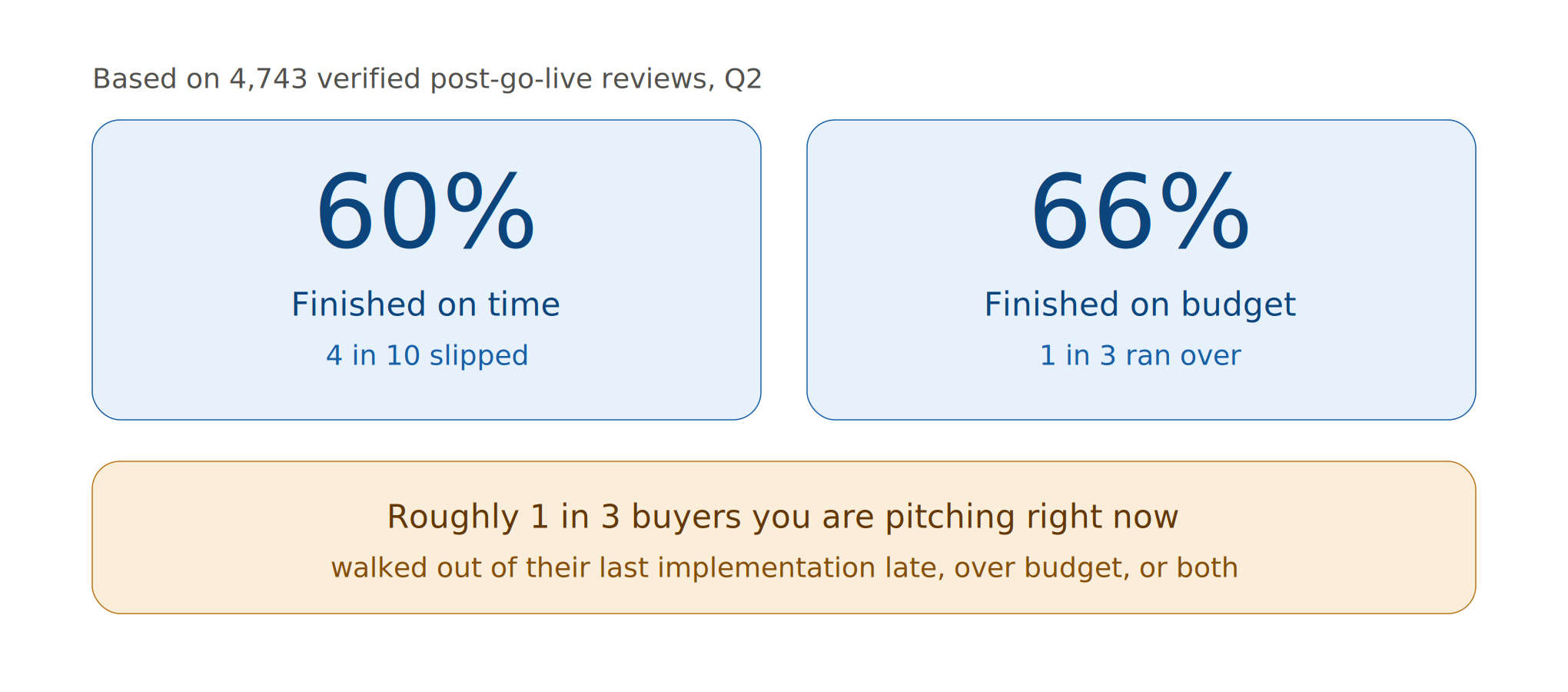
Raven Intelligence has collected 4,743 verified reviews from enterprise software customers describing the implementation they just lived through. In Q2, 60% of those projects finished on time and 66% finished on budget.
Do that math from the buyer’s chair. Roughly 1 in 3 of the people you are pitching right now walked out of their last implementation late, over budget, or both. They are not skeptical of your firm specifically. They are skeptical because the last firm talked a big game too.
Here is the part that should bother you: they have no good way to check. Software review sites and the analyst grids will tell a buyer how the software scores. Almost nobody is rating the 12 to 18 months of delivery work that decides whether that software ever gets used. That gap is the reason your best projects and your competitor’s worst projects look identical in an RFP.
Your references are curated and everybody knows it
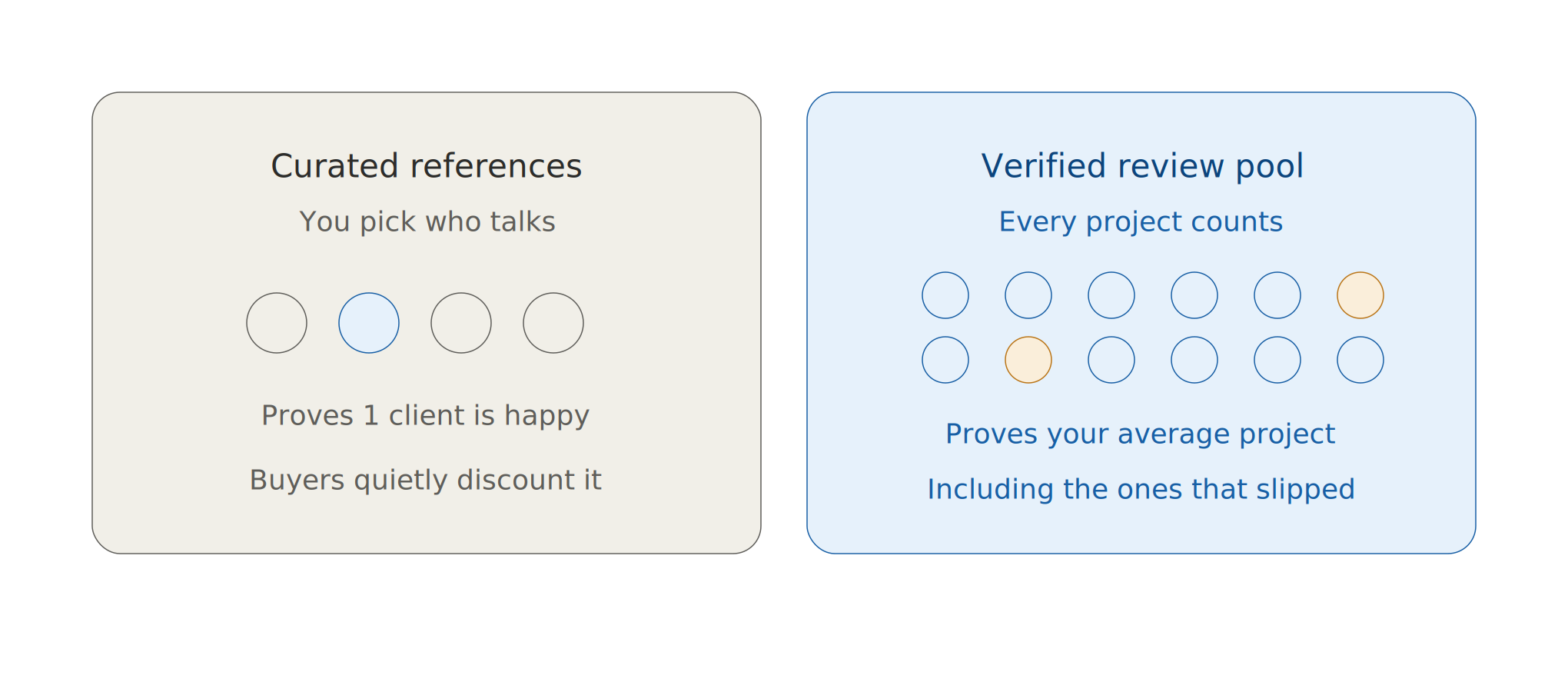
No shocker–a Consulting partner is only going to hand over happy references. Buyers understand this. They take the call, they ask their 4 questions, and then they quietly discount the whole conversation.
A reference you hand-picked proves you have at least 1 client who will say nice things. A verified review pool proves what you do on an average project, including the ones where the go-live slipped twice. Those are two very different claims and buyers price them very differently.
Conversely, if you are a boutique firm running 6 projects a year, a thin review pool can cut against you. Sample size is real. The answer there is not to skip reviews, it’s to collect them consistently enough that the pool means something by next year (and to be honest about the number until it does.)
Stop leading with certifications & headcount
Certification counts tell a buyer how many people you sent to training. Consultant headcount tells them how large you are. Neither one tells them whether the named consultant on the SOW is the consultant who shows up in month 4.
Raven’s data says consultant quality lands at 3.6 out of 5 across all firms and all software. That is a C+. It is also the single number buyers care most about, because it is the thing that goes wrong.
If your firm scores above that, say so with the number attached. If you don’t know where you score, that is the more urgent problem.
Read your own tough reviews before your competitor reads them
The reviews you don’t want to read are the useful ones. Scope creep (the “While We’re At It” kind), integration surprises, a strong North America team and a weaker EMEA bench, the project manager who changed 3 times.
None of that is fatal. All of it is fixable, and it is a great deal cheaper to fix from a review than from a lost renewal or a reference call that goes sideways.
Use the buyer’s actual words, not your marketing team’s
Go read how customers describe the work when nobody from your firm is in the room. They rarely say “accelerated time to value.” They say the consultant knew the payroll module cold, or that somebody finally explained what the testing phase was going to require from their internal team.
Put that language in your proposals. It is better copy than anything you will write about yourself, and it costs nothing!
Where buyers are actually looking
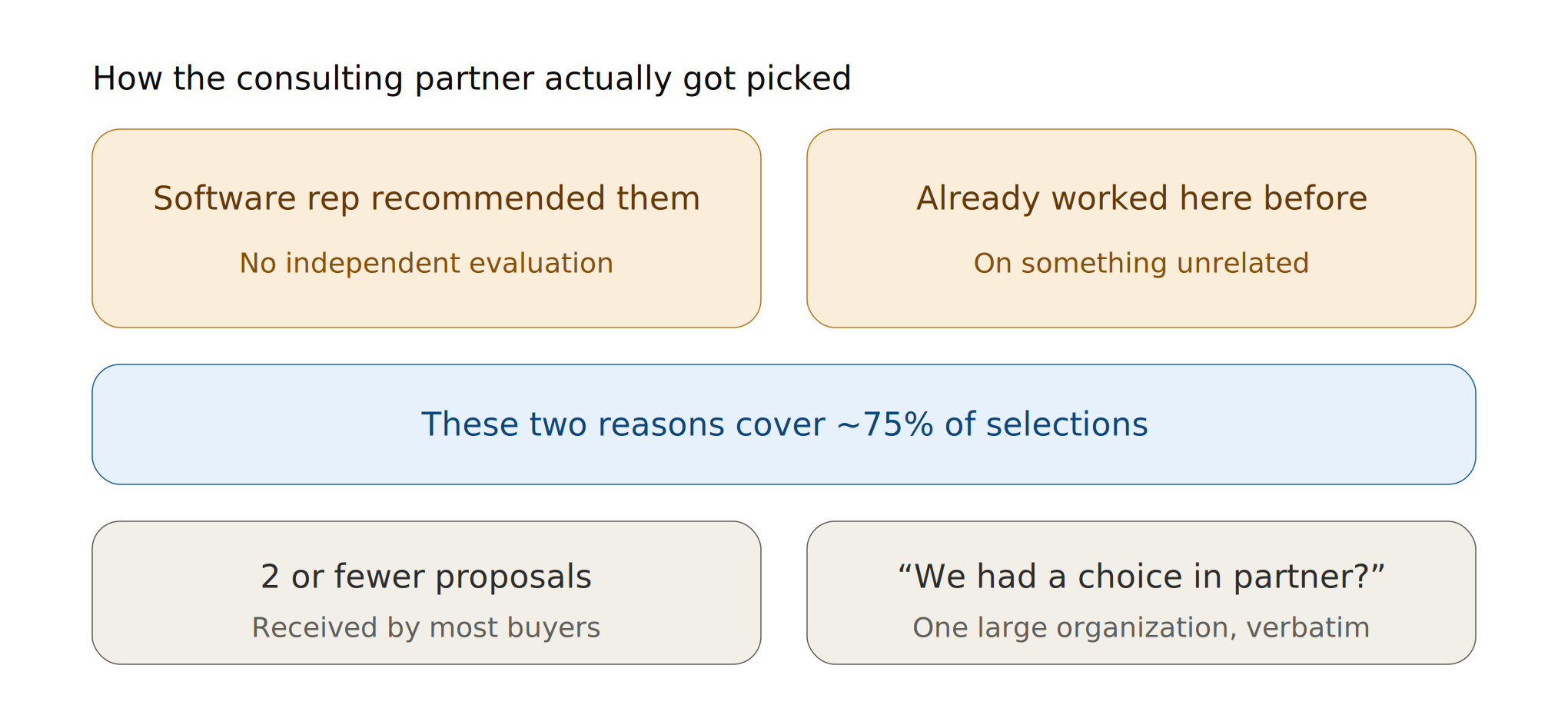
Most buyers do not run a real evaluation on the implementation team. In our data, roughly 75% of the time the Consulting partner got picked for 1 of 2 reasons: the software salesperson recommended them, or the firm had already done unrelated work somewhere else in the company. Most buyers received 2 or fewer proposals.
One large organization asked us, “We had a choice in partner?”
That is changing, slowly. The buyers who are changing it are the ones running structured partner evaluations, and they are looking for third-party evidence when they do. If you have none, you are competing on the airport-ad version of credibility.
What to do this week
Pull the list of every project you closed in the last 18 months. Pick the 5 you are least certain about, not the 5 you would send to a reference call, and ask those customers for a verified review.
The good ones become proof you didn’t have to write yourself. The rough ones become your project management roadmap for next quarter. Either way you are better off than you were guessing.